


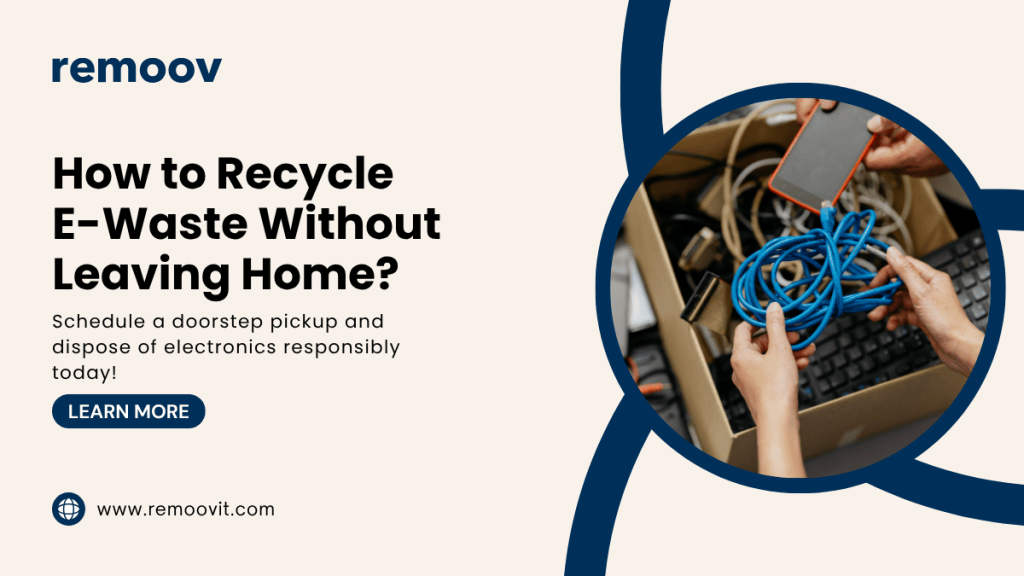
Electronic waste or e-waste is growing faster than any other type of household waste. As our homes fill up with outdated phones, old laptops, broken TVs, and unused gadgets, it becomes more important than ever to know how to safely recycle them. The good news? You can recycle e-waste without even leaving your home.
In this blog, we’ll explain what e-waste is, why recycling it matters, and how you can manage e-waste responsibly from the comfort of your own home.
What Is E-Waste?
E-waste refers to discarded electronic devices that are no longer functional or useful. Common examples include:
- Smartphones and tablets
- Laptops and desktop computers
- TVs and computer monitors
- Printers, scanners, and copiers
- Kitchen appliances like toasters, microwaves, and blenders
- Batteries, chargers, and cables
These items often contain hazardous materials like mercury, lead, and cadmium, which can pollute soil and water if not properly handled. But they also contain valuable resources like copper, gold, and aluminum that can be recovered and reused.
Why You Should Recycle E-Waste
Throwing e-waste in the trash isn’t just wasteful—it’s dangerous. Here’s why proper disposal matters:
1. Protects the Environment
When electronics are dumped in landfills, harmful chemicals can leak into the soil and groundwater, leading to long-term environmental damage.
2. Conserves Natural Resources
Many electronics contain rare and valuable materials. Recycling helps recover these resources so we don’t need to extract more from the earth.
3. Reduces Pollution
Mining and manufacturing new electronics creates greenhouse gas emissions. Recycling existing materials helps cut down on this pollution.
4. Supports the Circular Economy
By keeping materials in use longer, recycling reduces waste and supports more sustainable production practices.
How to Recycle E-Waste at Home
Recycling e-waste doesn’t have to be complicated. Here are five easy steps to manage it from home:
Step 1: Take Inventory
Look around your home for electronics you no longer use. This could be anything from an old phone in your drawer to a broken coffee maker in the garage.
Step 2: Check if It Can Be Reused
Not all old electronics need to be recycled. If something still works, consider:
- Donating it to a local school, charity, or nonprofit
- Giving it to a friend or family member
- Selling it online
Step 3: Find a Certified E-Waste Recycler
Search for a responsible recycler in your area. Look for organizations certified under e-Stewards or R2 (Responsible Recycling) standards. You can also:
- Use manufacturer take-back programs (Apple, Dell, Samsung, etc.)
- Visit major electronics retailers like Best Buy or Staples, which often have recycling drop boxes
- Use websites like Earth911.com or Call2Recycle.org to locate nearby recycling programs
Some programs offer free pickup for larger items.
Step 4: Back Up and Wipe Your Data
Before recycling your phone, laptop, or computer:
- Save any important files to a hard drive or cloud storage
- Perform a factory reset to erase all your personal information
- Remove memory cards or SIM cards
- Uninstall apps and accounts if applicable
This keeps your private information safe during the recycling process.
Step 5: Schedule a Pickup or Use Mail-In Recycling
Many e-waste recyclers and manufacturers offer at-home pickup or mail-in recycling options. Some examples include:
- Apple’s Trade-In: Offers gift cards or credit in exchange for old Apple products.
- Dell Reconnect: In partnership with Goodwill, allows drop-offs of Dell products for free recycling.
- Amazon Trade-In: Offers Amazon credit for eligible devices.
Be sure to follow packaging instructions carefully when mailing devices to avoid damage or hazards in transit.
What NOT to Do With E-Waste
It’s just as important to avoid common mistakes when getting rid of e-waste. Don’t:
- Throw it in the trash – This is illegal in many states and leads to pollution.
- Burn it – Burning electronics releases toxic chemicals into the air.
- Leave it on the curb – Unless your local city allows e-waste collection, it may end up in a landfill.
- Donate unusable devices – Charities can’t use broken electronics, and you’ll create more work for them.
What Happens During E-Waste Recycling?
Here’s what happens after your e-waste leaves your home:
1. Collection
Your items are collected through take-back programs, recycling centers, or drop-off bins.
2. Sorting and Dismantling
Recyclers sort items by type and manually remove batteries, bulbs, and hazardous materials. Devices are then dismantled to recover useful components.
3. Shredding and Separation
Electronics are shredded into small pieces. Metals like copper, aluminum, and steel are separated using magnets and eddy currents. Plastics and glass are sorted and cleaned.
4. Material Recovery
Recovered materials are sent to manufacturers to be reused in new products—reducing the need for mining and resource extraction.
What Materials Can Be Recovered?
Recycling helps recover valuable materials including:
- Precious metals: Gold, silver, platinum
- Rare earth metals: Cobalt, neodymium, palladium
- Base metals: Aluminum, copper, steel
- Plastics and glass
These materials are used in everything from new electronics to cars, tools, and packaging.
Common Items You Can Recycle from Home
Here are some of the most common household items you can recycle without leaving your house:
- Phones and tablets
- Laptops and desktops
- TVs and computer monitors
- Chargers, cords, and batteries
- Small appliances like coffee makers or blenders
- Gaming consoles and accessories
- Modems, routers, and smart home devices
For batteries and cords, many mail-in programs offer prepaid shipping labels.
Helpful Tips for Reducing E-Waste at Home
- Buy fewer devices: Only upgrade when truly needed.
- Repair before replacing: Fixing a cracked screen or replacing a battery extends product life.
- Avoid single-use electronics: Buy quality items designed to last.
- Use cloud storage: Reduce your need for USB drives or external hard drives.
- Purchase refurbished: Reused products help reduce e-waste and save you money.
Final Thoughts
Recycling e-waste doesn’t have to be a chore. With a little planning, you can manage it safely and responsibly right from your own home. Whether it’s scheduling a pickup, mailing in a phone, or finding a local drop-off site, your actions make a real difference.
By doing your part, you help reduce pollution, recover valuable materials, and protect the planet for future generations. Every device recycled is a step closer to a cleaner, more sustainable world.
Looking for a hassle-free way to recycle e-waste?
Remoov offers full-service junk removal, donation, and recycling—so you can clear out your old electronics without lifting a finger. Schedule your pickup today and make responsible recycling easier than ever.