


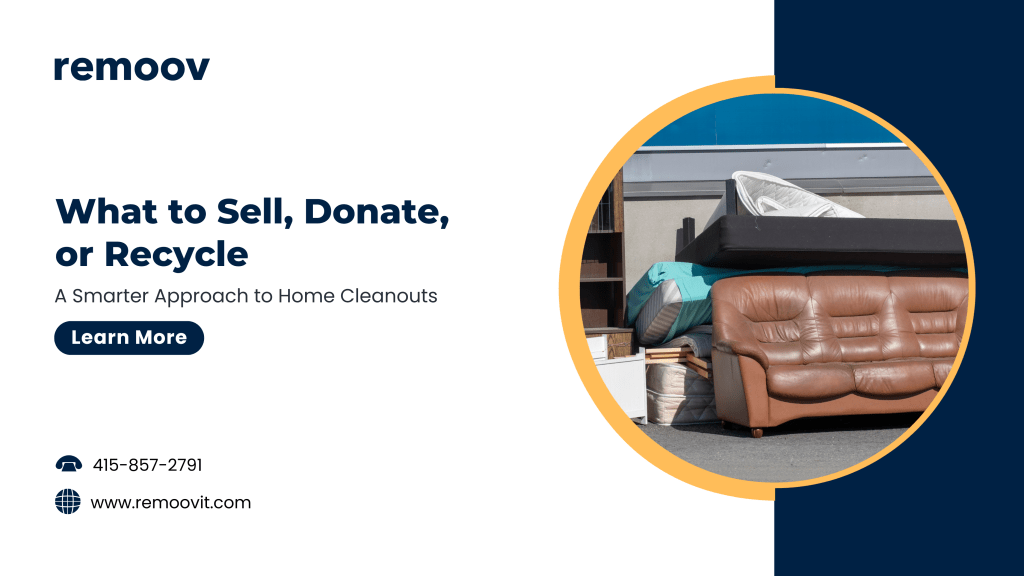
Home cleanouts always sound simple at first. You walk into a room, see what needs to go, and start sorting. But once you begin opening closets, reaching into drawers, and lifting boxes that have not been touched in years, the real challenge appears. Every object has a story. Some things feel too valuable to toss. Others feel sentimental. And then there are items that clearly need to leave, but you are not sure how to handle them responsibly.
The truth is that most people get stuck not because they cannot decide what to remove, but because they do not know the smartest way to make those decisions. Should you try selling something? Would donating be better? Or does it actually belong in a recycling facility instead of a landfill?
A clear approach makes the process faster, easier, and far less emotional. With the right system, you can empty a home efficiently while still being thoughtful about what stays in the world and what does not.
Below is a practical guide inspired by modern organizing methods and real home cleanout experiences. It walks you through how to evaluate belongings, when selling makes sense, what donation centers will accept, and which items require special recycling.
Start With a Clear Goal Before Sorting
Before you touch a single box, take a moment to ask a simple question:
What is the purpose of this cleanout?
You might be:
- Preparing a home for sale
- Downsizing to a smaller place
- Clearing an estate after a loved one’s passing
- Decluttering a lived-in space that feels overwhelming
- Making room for a renovation or move
Your goal shapes everything. If speed matters, the process becomes more direct. If you are working through sentimental belongings, you might move slower and make decisions with more care. Families working together also benefit from having the same goal, since it reduces disagreements and confusion.
When you know your purpose, the next steps feel far less stressful and much more intentional.
Set Up a Simple Sorting System
Overly complicated systems often slow people down. You do not need color coding, stickers, or apps to get started. A three-category method works for nearly every home:
Sell
Items with solid resale value or strong market demand.
Donate
Items someone else can use that do not require selling effort.
Recycle
Anything that is broken, outdated, or not fit for resale or donation.
If you want a fourth optional category, include Keep for items you plan to hold onto, but make sure you limit how much lands there. A small memory box or clearly defined shelf is usually enough.
The key is to move quickly. Do not revisit each item ten times. Make your first decision, set it aside, and continue.
What to Sell: When It Actually Makes Sense
Selling is appealing because it feels rewarding to earn money from something you no longer need. But selling takes time, effort, and sometimes patience. You must evaluate the value of your time as much as the value of the item.
Below are the situations where selling is truly worth it:
Items With Strong Market Demand
Certain categories sell consistently well:
- Designer clothing and handbags
- Tech devices in working condition
- Solid wood furniture
- Limited edition collectibles
- Branded exercise equipment
- High-quality tools
If you can reasonably list an item for a worthwhile price, the effort usually pays off.
When an Item Has a Local Buyer Market
Some goods sell better locally than online, such as dining sets, sofas, office furniture, or heavy decor. Selling locally also avoids shipping headaches.
When the Condition is Excellent
Items with minimal wear, original packaging, complete parts, and working batteries or chargers attract buyers faster and at higher prices.
When You Are Willing to Manage Messages and Pickup
The emotional labor of selling is often underestimated. If you have the patience to answer questions, pick safe meeting spots, and manage negotiations, selling works well.
If you find yourself hesitating, the item may not be worth the listing effort. Many people discover that the time spent selling a ten-dollar item is never truly worth it. Focus on higher-value belongings and group smaller items into bundles if needed.
What to Donate: Giving Items a Second Life
Donation is one of the most satisfying parts of a cleanout because it lets your belongings continue helping someone else. Many items that seem too small or too ordinary can make a big difference to a family, a shelter, or a local community center.
Here is what typically makes great donation material:
Clothing and Shoes in Good Condition
Most organizations accept gently used clothing, including jackets, kids’ apparel, and seasonal items. Even pieces not in perfect resale condition can often be recycled through textile programs.
Furniture That Still Has Life Left
Dressers, chairs, tables, nightstands, and smaller household furniture often find quick use in shelters and transitional housing programs.
Small Appliances
Coffee makers, microwaves, toaster ovens, and vacuums can make a real impact when they work properly.
Household Goods
Dishes, pots, pans, utensils, blankets, towels, decor, and books are accepted by many thrift stores and nonprofits.
Kids’ Items
Toys, games, baby gear, books, and learning materials are always needed, although some places do not accept car seats or cribs for safety reasons.
Before donating, check local guidelines so you know exactly what is accepted. Many nonprofits even offer pickup for bulk donations, which saves time and keeps the cleanout moving smoothly.
One important tip: donate with care. Items should be clean, functional, and free from major stains or damage. Donation centers cannot use or resell broken goods.
What to Recycle: Handling Items That Cannot Be Donated
There will always be belongings that cannot be sold or donated. That does not mean they should go in the trash. Recycling keeps materials out of the landfill and ensures they are processed safely.
Common items that should be recycled rather than discarded include:
Old Electronics
Laptops, phones, printers, monitors, chargers, cables, and accessories contain materials that must be handled by certified recyclers.
Batteries
Household and rechargeable batteries need special drop-off locations.
Light Bulbs
CFLs and fluorescents contain chemicals and must be recycled properly.
Metal Items
Broken tools, hardware, damaged appliances, and old pans can be brought to metal recycling facilities.
Paper and Cardboard
Shred sensitive documents and recycle the rest.
Paint, Chemicals, and Household Hazards
These must go to local hazardous waste facilities for safe handling.
If the item is stained, mildewed, broken, moldy, missing parts, or unsafe for use, recycling is the responsible choice.
How to Handle Sentimental Items Without Feeling Overwhelmed
Sentimental belongings create the biggest emotional roadblocks during cleanouts. These items hold memories and can feel too meaningful to let go.
Here is a gentle approach:
- Keep a small memory box so you retain only the most important items
- Digitize letters, photos, albums, and documents to reduce physical storage
- Choose one item from a collection rather than keeping the entire set
- Share sentimental pieces among family members
- Repurpose items so they continue serving a purpose
This method keeps the emotional value while reducing clutter.
When It Is Time to Bring in Professionals
Even with the best intentions, some cleanouts are simply too large or too emotional to handle alone. Professional help becomes essential when:
- The home is packed with decades of belongings
- Family members cannot agree on decisions
- The timeline is tight
- Heavy lifting or hauling is required
- You want items to be handled sustainably
- You need help organizing sell, donate, and recycle categories
A professional cleanout saves time and prevents burnout. It also ensures that items are disposed of responsibly, with minimal landfill waste.
How Remoov Helps Make Cleanouts Easier
Remoov is built for exactly these moments. When sorting decisions feel overwhelming or you do not have time to manage selling, donating, and recycling on your own, Remoov handles everything in one pickup.
Here is how Remoov simplifies the process:
- Items with resale value are photographed, listed, and sold for you
- Usable belongings are donated to local nonprofit partners
- Everything else is recycled responsibly
- You only pay for what is removed
- No need to lift, haul, or coordinate multiple vendors
- A single appointment clears entire rooms or full properties
With Remoov, your belongings are handled thoughtfully and sustainably, and nothing goes to waste without reason. It is the only full-service decluttering solution in the United States that helps customers sell, donate, and recycle in one streamlined process.
A Smarter, Calmer Way to Declutter
A home cleanout does not have to be chaotic or stressful. With a clear system, thoughtful decision-making, and the right support, you can move through the process with confidence. Selling, donating, and recycling each play a meaningful role in giving your belongings a respectful and responsible next chapter.
And when the project grows too large or too time-consuming, Remoov is ready to step in and help you complete the cleanout smoothly and sustainably.
Your home becomes lighter. Your mind becomes clearer. And your items find the right place, whether that is a new home, a nonprofit, or a recycling facility.If you want help clearing everything in one visit, Remoov is here to make it easy.