


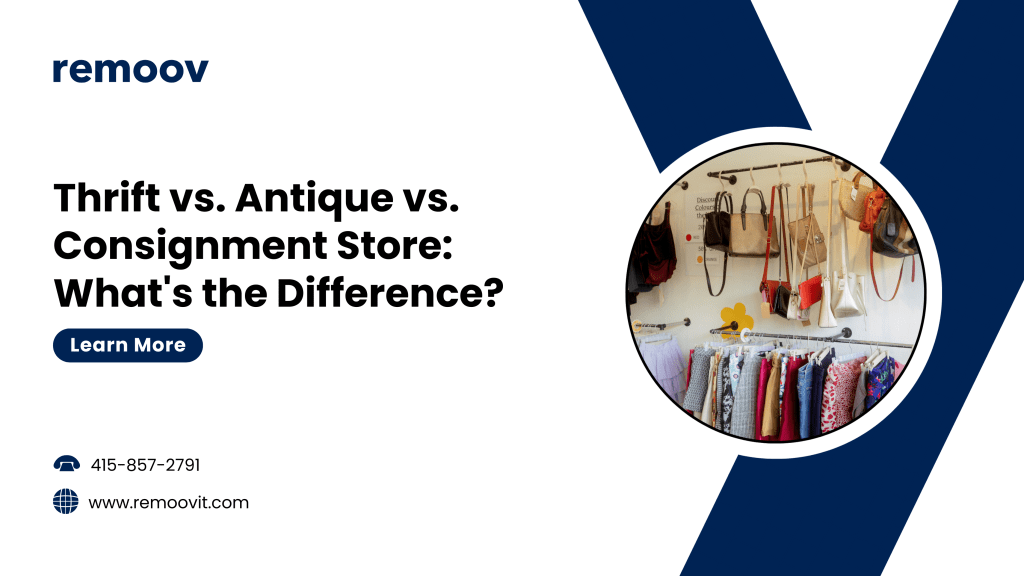
Shopping secondhand is one of the smartest ways to furnish your home for less, find unique pieces, and keep usable items out of landfills. But many people still ask the same question before they go. What is the difference between a thrift store, an antique store, and a consignment store?
The answer matters because each option has a different purpose, pricing style, quality range, and buying experience. If you know what you are walking into, you can shop faster, find better deals, and avoid wasting time in the wrong place.
This guide breaks down thrift vs. antique vs. consignment stores in a clear, practical way, plus how to choose the best option for your budget and the kind of items you want.
The Quick Difference Between Thrift, Antique, and Consignment
Thrift stores sell donated items at low prices and inventory changes constantly. Antique stores sell older, curated pieces that are priced based on age, craftsmanship, and demand. Consignment stores sell pre-owned items on behalf of the original owner, usually with higher quality standards and mid-range pricing.
If you want the simplest takeaway, use this:
- Thrift is for low cost and surprise finds
- Antique is for character, age, and collectible value
- Consignment is for quality items at a discount compared to buying new
What Is a Thrift Store
A thrift store is a shop that sells donated items. Many thrift stores are connected to charities or nonprofit organizations, but there are also for-profit thrift shops that operate similarly.
How Thrift Stores Get Inventory
Thrift stores typically receive items through:
- Donations from local households
- Community drop-offs and donation bins
- Donation drives
- Bulk cleanouts and estate situations
Because inventory depends on donations, thrift stores are unpredictable. That is part of the appeal. A store can be completely different from one day to the next.
What You Usually Find at Thrift Stores
Thrift stores often carry:
- Clothing and shoes
- Kitchenware and small appliances
- Books and toys
- Home decor
- Small furniture and occasional larger furniture
- Seasonal items
Condition can vary widely. Some items are nearly new. Others may need cleaning or repair.
When Thrift Stores Are the Best Choice
Choose thrift when you want:
- The lowest prices
- Basic household items fast
- Fun treasure hunting
- A budget-friendly way to experiment with style
Pros and Cons of Thrift Stores
Pros:
- Usually the most affordable option
- Great for basics and starter homes
- New inventory constantly
- Many stores support a cause
Cons:
- Less curation and more condition uncertainty
- Limited returns, often final sale
- You may need to clean, repair, or refinish
- Finding the right item can take time
What Is an Antique Store
An antique store sells older items that have value based on age, craftsmanship, design, rarity, or collectability. Many people use “antique” and “vintage” interchangeably, but “antique” is often associated with older pieces, while “vintage” usually refers to items that are newer but still from a past era and desirable.
How Antique Stores Get Inventory
Antique stores typically source through:
- Estate sales and auctions
- Dealers and collector networks
- Private sellers
- Long-term buying relationships
Most antique stores are curated. Items are usually chosen intentionally rather than accepted in bulk.
What You Usually Find at Antique Stores
Antique stores often include:
- Solid wood furniture like dressers, buffets, and tables
- Vintage mirrors and art
- Lamps and lighting with older materials and design
- Collectibles and decorative pieces
- Era-specific inventory such as mid-century, farmhouse, or industrial
When Antique Stores Are the Best Choice
Choose antique when you want:
- A statement piece with character
- Better craftsmanship than many modern mass-made options
- A specific era or design style
- Items that can hold value over time
Pros and Cons of Antique Stores
Pros:
- Curated selection with unique pieces
- Often higher craftsmanship and materials
- Great for one-of-a-kind home design
- Many pieces are built to last
Cons:
- Often higher prices
- Some items require special care and maintenance
- Authenticity can require research
- Shipping and delivery can be more complicated for large pieces
What Is a Consignment Store
A consignment store sells items for the original owner and shares the sale revenue with them. The store manages pricing, display, and selling. The owner earns money when the item sells.
Consignment is common for furniture, home decor, designer clothing, and baby items because these categories can still have strong resale value.
How Consignment Stores Get Inventory
Consignment inventory usually comes from:
- Homeowners selling quality items without listing them online
- People downsizing or moving
- Designers and stagers rotating inventory
- Households upgrading furniture and decor
Many consignment stores have stricter standards than thrift stores. They may reject items that are damaged, overly worn, or not in demand.
What You Usually Find at Consignment Stores
Consignment stores often carry:
- Furniture in good condition
- Brand name and designer decor
- Modern and transitional styles
- Gently used household goods depending on the shop
When Consignment Stores Are the Best Choice
Choose consignment when you want:
- Better condition standards than thrift
- Quality furniture for less than retail
- A more curated shopping experience
- Brand-name items without paying full price
Pros and Cons of Consignment Stores
Pros:
- Generally higher quality and better condition
- More curated, easier to shop than thrift
- Good value compared to buying new
- Often includes furniture and decor people actually want
Cons:
- Prices higher than thrift, especially for popular brands
- Inventory moves fast, so delays can mean missing out
- Return policies can still be strict
- Pickup windows and delivery rules may be limited
Thrift vs. Antique vs. Consignment Store: Side-by-Side Comparison
Use this quick cheat sheet to choose faster.
Pricing
- Thrift stores are usually the lowest.
- Consignment stores are often mid-range
- Antique stores are often highest due to rarity and demand
Inventory Style
- Thrift stores are high volume and unpredictable
- Consignment stores are curated and quality checked
- Antique stores are curated with an emphasis on age, story, and craftsmanship
Best for Furniture
- Thrift stores are best if you have time to hunt for gems
- Consignment stores are best for reliable, good-condition finds
- Antique stores are best for statement pieces and solid wood craftsmanship
Best for Decor and Small Items
- Thrift stores are best for low-cost basics and fun decor
- Consignment stores are best for higher-end decor and recognizable brands
- Antique stores are best for unique decor with character and history
How to Choose the Right Store Based on What You Need
The best store depends on what you are trying to buy and how much time you want to spend searching.
Choose a Thrift Store If You Want the Lowest Price
Thrift is best when budget is the main factor and you are open to surprise finds. It is also great for basics like dishes, kitchen tools, and storage items.
Choose an Antique Store If You Want Character and Craftsmanship
Antique is best when you want something with presence, quality, and design personality. You are paying for uniqueness and history, not just the item itself.
Choose a Consignment Store If You Want Quality Without Buying New
Consignment is best when you want furniture and decor that feels intentional, looks cleaner, and is in better shape than most thrift finds.
Smart Shopping Tips That Work for All Three
No matter which store you visit, these habits help you buy better and avoid regret.
Measure Before You Go
Bring key measurements, especially doorway widths and stair angles if you are buying furniture. Many great finds fail at the last step because they do not fit.
Inspect Like a Pro
Check for:
- Wobble or weak joints
- Drawers that stick or do not align
- Stains, odors, or pet damage on fabric
- Signs of pests in seams and corners
- Water damage or warping on wood
Ask About Returns and Pickup
Many secondhand stores are final sale. Some offer store credit. Always confirm before you pay, especially for large furniture.
Shop With a Purpose
Secondhand shopping can easily create clutter if you buy items without a purpose. A list keeps your home from filling up with random bargains.
What to Do With the Items You Are Replacing
Secondhand shopping often starts with a good upgrade. You find a better dresser, a nicer couch, or a dining table you love. But now you have to deal with what you are replacing.
This is where many households stall. The old pieces sit in a garage, become a new pile in a spare room, or end up on the curb because selling and donating feels like too much work.
If you want your upgrade to feel like progress, your old items need a clear next step.
How Remoov Helps You Clear Out and Upgrade Responsibly
If you shop thrift, antique, or consignment, you are already making a more sustainable choice. The next step is making sure your outgoing items are handled responsibly too.
Remoov makes it easy to remove furniture and household items without spending weeks listing items, coordinating buyers, or researching donation and recycling rules.
With one pickup, Remoov helps route your items to the best destination, including resale for eligible items, donation for usable goods, and recycling or responsible disposal for what cannot be reused.
Remoov is the only full-service decluttering solution in the U.S. that helps you sell, donate, and recycle in one pickup. That means you can upgrade your home, clear the old items fast, and feel confident your items are handled the right way.