


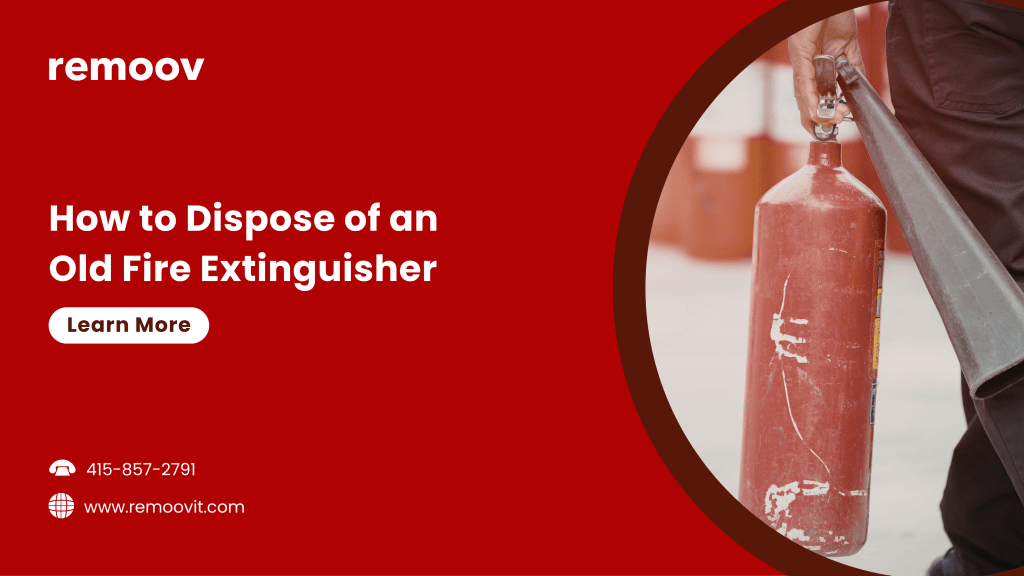
Most people do not think twice about an old fire extinguisher until they are cleaning out a garage, moving, or spot an expiration date that is long past. Then the question hits: can I just toss it?
In almost every case, the answer is no. A traditional fire extinguisher is a pressurized container filled with chemicals. If it gets crushed in a trash truck or handled the wrong way, it can be dangerous for you and for the workers who deal with waste every day. The good news is that disposal is usually simple once you know what type you have and where your local drop-off options are.
This guide walks you through the safest way to get rid of an old fire extinguisher, what to do if it still has pressure, and when it is worth refilling instead of disposing.
Why You Cannot Throw A Fire Extinguisher In The Trash
Even small home extinguishers are pressurized. That pressure is the issue. If the canister is punctured or compacted, it can rupture. On top of that, many extinguishers contain powders, foams, or clean agents that should not go into normal landfill streams.
That is why most areas treat old fire extinguishers as household hazardous waste, especially if they are not completely empty.
Step 1: Figure Out What You Have
Before you decide where to take it, do a quick check.
Check The Label For Type And Instructions
Look for wording like:
- ABC or BC Dry Chemical (common red extinguisher for home use)
- CO2 (often heavier, sometimes with a horn style nozzle)
- Water, Foam, Or Wet Chemical (more common in commercial kitchens or specialty use)
- Clean Agent (Halotron or similar)
The label also often tells you whether it is rechargeable or disposable.
Check If It Is Rechargeable
A quick rule of thumb:
- Metal valve, gauge, and a service collar often means it can be serviced.
- Plastic handle usually means it is not designed to be refilled.
If you are not sure, treat it as not refillable and move to proper disposal.
Step 2: Check The Pressure Gauge And Condition
Now look at the gauge.
If The Needle Is In The Green
It may still be usable, even if it is older. But age matters. If the extinguisher is expired, damaged, or has corrosion, you should still replace it.
If The Needle Is In The Red Or The Unit Looks Damaged
Do not store it indoors “until later.” Rust, dents, cracked hoses, or a missing safety pin are all signs it is time to retire it and dispose properly.
If You Do Not Have A Gauge
Some models do not. In that case, rely on the date and overall condition. If it is old and you cannot confirm it is safe, plan on disposal.
Step 3: Decide Between Refill Or Disposal
This part saves money and avoids unnecessary waste.
When Refilling Makes Sense
Refilling is worth it when:
- The extinguisher is clearly marked serviceable
- The body is in good shape with no rust or dents
- It is a commercial-grade unit or a larger-capacity unit
- You want a professional to inspect and certify it
A fire equipment service company can inspect and recharge it. This is often the best option for durable, higher-quality extinguishers.
When Disposal Is The Better Choice
Disposal is the better move when:
- It is a basic household extinguisher with a plastic handle
- It is expired and has not been maintained
- It shows rust, damage, or leakage
- You used it, even briefly, and it is not meant to be refilled
Step 4: Choose The Safest Disposal Option
This is the part most people overcomplicate. In reality, you have a few reliable choices.
Option A: Household Hazardous Waste Drop Off
In most cities and counties, the simplest route is a Household Hazardous Waste (HHW) facility or scheduled collection event. These programs are designed for items that cannot go in the trash, including pressurized containers and chemical products.
What to do:
- Search your city or county site for “household hazardous waste” and “fire extinguisher.”
- Check limits. Some facilities cap how many you can drop off per visit.
- Transport it safely upright in your trunk or back seat so it does not roll around.
This is usually the best option for homeowners because it is straightforward and the staff already knows how to handle pressurized containers.
Option B: Fire Protection Or Extinguisher Service Companies
Many fire protection companies will take old extinguishers, especially if they originally serviced or sold them. They can handle the contents and recycle parts of the unit more responsibly than a standard waste stream.
This is a strong option when:
- You have multiple extinguishers
- You have a commercial style unit
- You want a simple handoff without worrying about local rules
Option C: Community Collection Events
If you do not have an HHW site nearby, look for collection events. Many counties run periodic drop-offs for hazardous waste, e-waste, and chemicals.
This works well if you are already cleaning out paint, batteries, old cleaners, or other hazardous items.
Step 5: Should You Discharge It First?
This depends on local rules. Some facilities accept extinguishers whether they are full or empty. Others prefer them fully discharged.
If your local HHW program gives clear instructions, follow those instructions exactly.
If you decide to discharge it, do it safely.
How To Discharge A Fire Extinguisher More Safely
Only do this if you feel comfortable and conditions are safe.
- Go outside to an open area away from people, cars, and windows.
- Aim the nozzle away from your face and body.
- Use short bursts rather than holding it down continuously.
- Keep going until the gauge reads empty.
- After it is empty, squeeze the handle again to confirm there is no residual pressure.
Important: this can be messy, and for powder extinguishers it can create a cloud that is irritating to breathe. Avoid doing this in a confined area.
If you are unsure, skip this step and bring it to HHW or a service company instead.
Step 6: Can You Recycle A Fire Extinguisher?
Sometimes, but not the way people assume.
A fire extinguisher can be recycled as metal only after it is truly depressurized and accepted by the facility. Some scrap yards require the valve or head to be removed, and many will not accept them at all because of the pressure risk.
If you want to recycle it:
- Call the recycler first and ask if they accept old extinguishers.
- Ask what condition it must be in.
- Do not assume “empty” means acceptable.
In many cases, taking it through HHW or an extinguisher service company is the cleaner and safer solution.
Step 7: What Not To Do
These are the mistakes that cause problems.
- Do not put it in curbside trash or curbside recycling.
- Do not puncture the cylinder.
- Do not try to “empty” a pressurized unit by forcing parts open.
- Do not store it inside a hot garage or near a heater if you believe it may be compromised.
- Do not leave it by a dumpster and hope someone takes it.
When To Replace Your Fire Extinguisher
Disposal is only half the story. You also want to replace it with the right unit and keep it ready.
Replace your extinguisher if:
- It is expired based on the manufacturer guidance
- The gauge is not in the green
- The hose is cracked or clogged
- The pin is missing or tamper seal is broken
- The canister is dented, rusted, or leaking
- It has been used, even briefly, and is not designed for refill
A working extinguisher is only helpful if it is accessible and maintained, so use this cleanout moment to place a new one where you will actually reach it fast.
Where Remoov Fits In
Fire extinguishers are one of those “small but tricky” items that often show up during a bigger cleanup, like moving, downsizing, or staging a home. You start with one odd item, then you realize the garage is full of stuff you do not want to haul, list, donate, or sort.
That is where Remoov can help. Instead of making a dozen different plans, Remoov helps you clear out faster by coordinating what can be resold, what can be donated, and what should be responsibly recycled or disposed of, so you can move on without the clutter hanging over you. And unlike basic junk hauling, Remoov is built around full decluttering support, helping you sell, donate, and recycle in one pickup.
Final Checklist To Dispose Of An Old Fire Extinguisher
Use this quick checklist to finish the job without stress:
- Identify the type and whether it is rechargeable
- Check the gauge and overall condition
- Decide refill vs disposal
- Use an HHW facility, collection event, or extinguisher service company
- Only discharge it if your local program asks you to
- Do not trash it, puncture it, or leave it at the curb
Ready To Clear Out The Rest?
If getting rid of one old extinguisher made you realize you have a bigger cleanout on your hands, Remoov can make the entire process easier, especially when you are trying to declutter quickly for a move, a remodel, or home staging.
When you are ready, clear the space the smart way: keep what matters, sell what has value, donate what can help someone else, and responsibly dispose of the rest.