


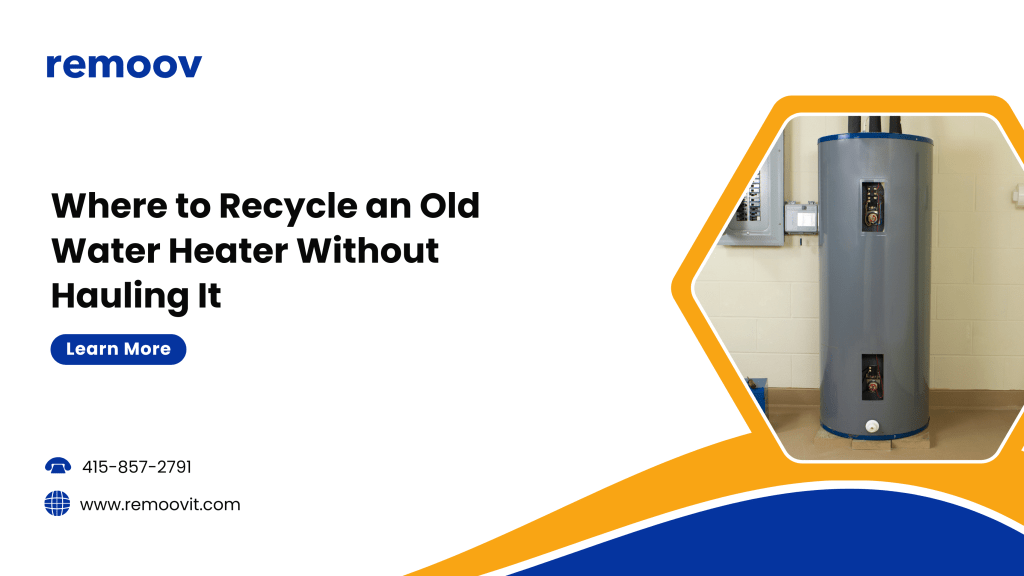
An old water heater is one of those household items people rarely deal with until they have no choice. It starts leaking, stops heating properly, or gets replaced during a plumbing upgrade, and suddenly you are stuck with a heavy metal tank that no longer belongs in your home. The problem is not just figuring out where it should go. The real problem is how to get rid of it without trying to haul it yourself.
That is why so many homeowners end up searching for the same thing: where to recycle an old water heater without hauling it. A water heater is bulky, awkward, and often still connected when you first start thinking about removal. Even if you know recycling is the better option, the physical part of the job is what usually slows everything down.
The good news is that you do not have to treat an old water heater like ordinary junk. Depending on its condition, it may be recyclable, worth scrapping, or in rare cases even usable enough for donation. This guide explains your best options, what to do before pickup, and how to clear out the old unit without turning it into a full-day hauling project.
Why an Old Water Heater Should Not Just Be Left Behind
A water heater is easy to ignore once it is no longer in use, especially if it is sitting in a garage, utility closet, basement, or side yard. But these units take up a lot of room, and they rarely get easier to deal with over time.
An old tank can rust, collect debris, hold moisture, and become harder to move the longer it sits. It also creates a clutter problem in a space that is usually already tight. If it is still partially connected or has not been drained correctly, it can be even more frustrating to handle later.
The sooner you make a plan for removal, the easier the entire process usually is.
Can You Recycle an Old Water Heater?
In many cases, yes. Water heaters are often strong candidates for recycling because they contain a large amount of metal. Even when the unit no longer works, the tank and surrounding components may still have material recovery value.
That is what makes recycling a better option than sending the heater straight to the landfill. The exact recycling path depends on your local options and on whether the unit has already been disconnected and drained, but in general, water heaters are one of the more recyclable large appliances people deal with during home cleanouts.
The challenge is not usually whether the heater can be recycled. The challenge is getting it out without having to haul it yourself.
Working vs. Nonworking Water Heaters
Before deciding where the unit should go, it helps to be honest about its condition. If the water heater still works well and is relatively newer, there may be situations where donation or resale is possible. That said, this is less common than with other appliances.
Water heaters are not as easy to donate as washers, dryers, or microwaves because installation requirements are more specific and buyers or organizations usually do not want older units with uncertain history. Most of the time, if a water heater is being removed, it is because it has already reached the end of its practical life.
That means recycling or scrap is usually the most realistic path. If you are still comparing whether an appliance should be donated, recycled, or sold, it can help to think through old appliance recycling or reselling before deciding too quickly.
The First Step: Disconnect and Drain It Safely
Before any recycling or pickup can happen, the water heater needs to be properly disconnected and drained. This is one of the most important parts of the process.
A full water heater is extremely heavy, and even a partially drained one is much harder to move than most people expect. That is why the unit should be disconnected from power or gas, shut off from the water supply, and emptied before removal.
If you are comfortable handling that safely, you may be able to prepare it yourself. If not, this is one of those situations where having a plumber or qualified professional disconnect it is often the smarter move. The removal itself is hard enough. You do not want the prep step creating a safety problem too.
Why Most People Do Not Want to Haul a Water Heater Themselves
Even after it is drained, a water heater is still a difficult item to move. It is large, heavy, cylindrical, and awkward to grip. It may be sitting in a narrow closet, basement corner, garage platform, or tucked behind other utilities.
That is why so many people do not actually need help figuring out where to recycle it. They need help getting it out.
A local recycling yard may accept the tank, but getting it there is the barrier. You need lifting help, the right vehicle, and a clear understanding of where the heater is going. For most homeowners, the hauling part is the reason the old unit ends up sitting around long after the new one is already installed.
Where to Recycle an Old Water Heater
If you are looking for where to recycle an old water heater without hauling it, the most common options usually fall into a few categories.
Local scrap metal recyclers are often one of the first places people think of because water heaters contain a lot of metal. Appliance recycling centers may also accept them. In some areas, municipal bulk waste or metal recycling programs may be another option.
The difficulty is that even when the recycler is easy to find, the unit still has to get there. That is why pickup becomes such an important part of the process. A recycling option is only useful if you can realistically get the heater from your house to the destination. If you are comparing broader removal options for appliances in general, appliance recycling pickup is usually the most relevant place to start.
Is Scrapping a Water Heater Worth It?
Sometimes, but usually only if the hauling part is already handled. Water heaters may contain metal components that have scrap value, and some people choose to take them to scrap yards for that reason. In some cases, fittings or parts may be more valuable than the tank itself.
But for most homeowners, the value is not high enough to justify the effort unless the scrap yard is close, the heater is already removed, and you have an easy way to transport it. Once lifting, loading, and hauling become part of the equation, scrap value alone usually is not the deciding factor.
The better question is often not how much is it worth, but what is the simplest responsible way to get it out.
Can You Leave a Water Heater for Bulk Trash Pickup?
Sometimes, but not always. This depends heavily on your local bulk collection rules. Some cities allow bulky appliance pickup on certain days or by appointment. Others require special arrangements or do not accept items like water heaters at all.
Even when bulk trash pickup is available, it may not mean the unit is being recycled. It may simply be removed with other bulk waste. So if your goal is specifically to recycle the old water heater, relying on curbside disposal may not be the best route.
That is why many people look for a more direct pickup option instead of hoping a city service will handle it the way they want. In some cases, it is also worth checking who will pick up old appliances for free before assuming you have to arrange transport yourself.
When Donation Is Not Worth Pursuing
In theory, a newer water heater in excellent condition may have some reuse value. In practice, donation is not usually the strongest route for this kind of item. Because water heaters involve installation, plumbing compatibility, age concerns, and performance uncertainty, most organizations are much more selective about accepting them.
That means if you are searching for where to recycle an old water heater, you are probably already past the donation stage. In most cases, that is the right assumption.
Recycling, scrap, or removal is usually the more realistic answer.
What to Do Before Booking Pickup
If you want the process to go smoothly, it helps to prepare the area before pickup happens.
Make sure the tank is disconnected and drained. Clear a path around it so it can be removed more easily. Move other storage items, bins, or tools out of the way. If the heater is in a tight utility area, note any narrow doorways, stairs, or access challenges ahead of time.
These small steps make pickup much easier and reduce the chance of delays or confusion on removal day.
Why Pickup Is the Best Option for Most Homeowners
For something like a water heater, pickup is often the simplest and most realistic solution. The unit is too bulky for regular trash, too awkward for most personal vehicles, and too inconvenient to keep around once it is no longer useful.
This is especially true when the water heater is only one part of a bigger cleanup. It is common for an old water heater to sit near shelving, storage clutter, tools, extra appliances, or renovation leftovers. Once you are already dealing with a cleanup project, trying to make a separate hauling plan for the heater just adds more friction.
That is why coordinated removal is often the easiest way to actually finish the job. If the heater is only one part of a larger house reset, it also helps to think through what to sell, donate, or recycle so the rest of the cleanout moves faster too.
How Remoov Can Help
If an old water heater is part of a larger home cleanout, Remoov can help simplify the process. Instead of trying to create a separate plan for one unusually heavy item, Remoov helps streamline removal for accepted items so the cleanup can move faster.
That is especially helpful when the water heater is not the only thing taking up space. Maybe there is also old shelving, storage clutter, unused appliances, furniture, or renovation debris mixed into the project. In that kind of situation, one coordinated pickup approach is often much easier than trying to figure out separate hauling plans for each item.
And when those bulky items start adding up, it can also be useful to think in terms of the best ways to dispose of large furniture, since oversized household items often create the same kind of removal bottleneck.
Final Thoughts
If you are wondering where to recycle an old water heater without hauling it, the short answer is that recycling is usually possible, but transport is what makes the job difficult. Water heaters often contain recoverable metal and are good candidates for recycling or scrap, but their size and weight make pickup the more practical option for most homeowners.
The key is to disconnect and drain the unit safely, decide whether recycling is the right path, and avoid letting the old tank sit there for months because the hauling part feels inconvenient.
Once you stop thinking of it as just one more appliance and start treating it like the bulky removal project it really is, the next step becomes much easier to handle.